By Our Reporter
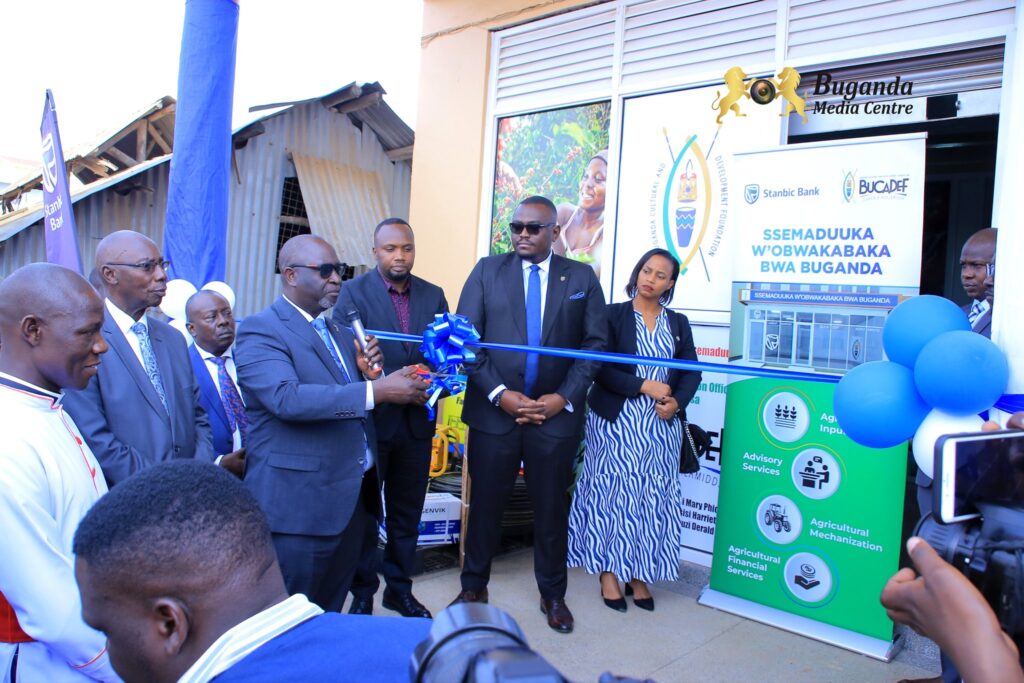
Stanbic Bank Uganda and the Buganda Kingdom have launched Ssemaduuka, a one-stop agricultural business centre designed to expand structured credit access for farmer-owned SACCOs and strengthen coffee value chains across the Kingdom.
The initiative was officially unveiled on Monday, February 23, at the Mayors Gardens in Mubende Municipality. It is being implemented through the Buganda Cultural and Development Foundation (BUCADEF) and seeks to create a coordinated ecosystem that links farmer SACCOs to affordable financing, quality farm inputs, aggregation centres, digital payments and export markets.
For farmers like Frank Nyanzi, a 57-year-old coffee grower from Madudu Sub-county in Mubende District, the programme represents a timely intervention. Over the past decade, Nyanzi has faced declining coffee yields due to prolonged dry spells, rising temperatures and persistent pest and disease outbreaks, including coffee wilt disease and coffee berry borer infestations. Limited access to long-term financing has further constrained his ability to invest in irrigation systems and quality inputs.
He notes that without reliable credit, many farmers are forced to operate below optimal productivity levels, undermining household incomes and long-term sustainability.
...
By Our Reporter
Stanbic Bank Uganda and the Buganda Kingdom have launched Ssemaduuka, a one-stop agricultural business centre designed to expand structured credit access for farmer-owned SACCOs and strengthen coffee value chains across the Kingdom.
The initiative was officially unveiled on Monday, February 23, at the Mayors Gardens in Mubende Municipality. It is being implemented through the Buganda Cultural and Development Foundation (BUCADEF) and seeks to create a coordinated ecosystem that links farmer SACCOs to affordable financing, quality farm inputs, aggregation centres, digital payments and export markets.
For farmers like Frank Nyanzi, a 57-year-old coffee grower from Madudu Sub-county in Mubende District, the programme represents a timely intervention. Over the past decade, Nyanzi has faced declining coffee yields due to prolonged dry spells, rising temperatures and persistent pest and disease outbreaks, including coffee wilt disease and coffee berry borer infestations. Limited access to long-term financing has further constrained his ability to invest in irrigation systems and quality inputs.
He notes that without reliable credit, many farmers are forced to operate below optimal productivity levels, undermining household incomes and long-term sustainability.
According to Tunde Thorpe, Head of Business and Commercial Banking at Stanbic Bank, Ssemaduuka marks a transition from fragmented agricultural support initiatives to a structured, value chain-driven financing model.
“Ssemaduuka enables us to finance the entire agricultural value chain, from input acquisition to export markets. It strengthens SACCO governance, enhances farmer productivity, formalises payment systems and expands market access. This is ecosystem banking structured to deliver measurable economic impact,” Thorpe said.
Under the new framework, BUCADEF will identify and recommend eligible SACCOs for financial support. Stanbic Bank will then assess the institutions and extend structured credit facilities. Farmers will access farm inputs through designated Masaza stores, while produce will be aggregated and linked to organised buyers to ensure predictable market channels.
Robert Waggwa Nsibirwa, the Second Deputy Premier (Katikkiro) and Minister for Finance, Investments, Planning and Economic Development in the Buganda Kingdom, described Ssemaduuka as a strategic intervention aimed at modernising agriculture and strengthening household incomes.
He emphasised that the initiative aligns with the Kingdom’s broader agenda of transitioning farmers from subsistence production to commercially viable agribusiness models capable of delivering sustainable prosperity.
Ssemaduuka also aligns with Stanbic Bank’s Positive Impact Agenda, which prioritises financial inclusion for women, youth and farmers, enterprise-led job creation, infrastructure development and climate resilience. Data from PEWOSA SACCOs indicates that more than 70 percent of members are women, underscoring the programme’s potential to advance women-led enterprises and inclusive growth.
Emmanuel Naigombe, Stanbic Bank’s Head of Agribusiness, said the model integrates digital solutions through the bank’s One Farm platform, enabling digitised transactions and trade finance solutions that facilitate export flows.
Coffee remains a cornerstone of Uganda’s rural economy, supporting thousands of households. However, climate change, pests, diseases and limited access to affordable credit continue to threaten productivity and incomes.
Through Ssemaduuka, Stanbic Bank and the Buganda Kingdom aim to reposition coffee farming as a resilient and commercially sustainable enterprise, offering farmers structured financing, improved input access and stronger linkages to organised markets.
As Stanbic Bank approaches 35 years of operations in Uganda in 2026, the initiative reinforces its long-standing commitment to driving inclusive economic growth under its purpose: Uganda is our home, we drive her growth.