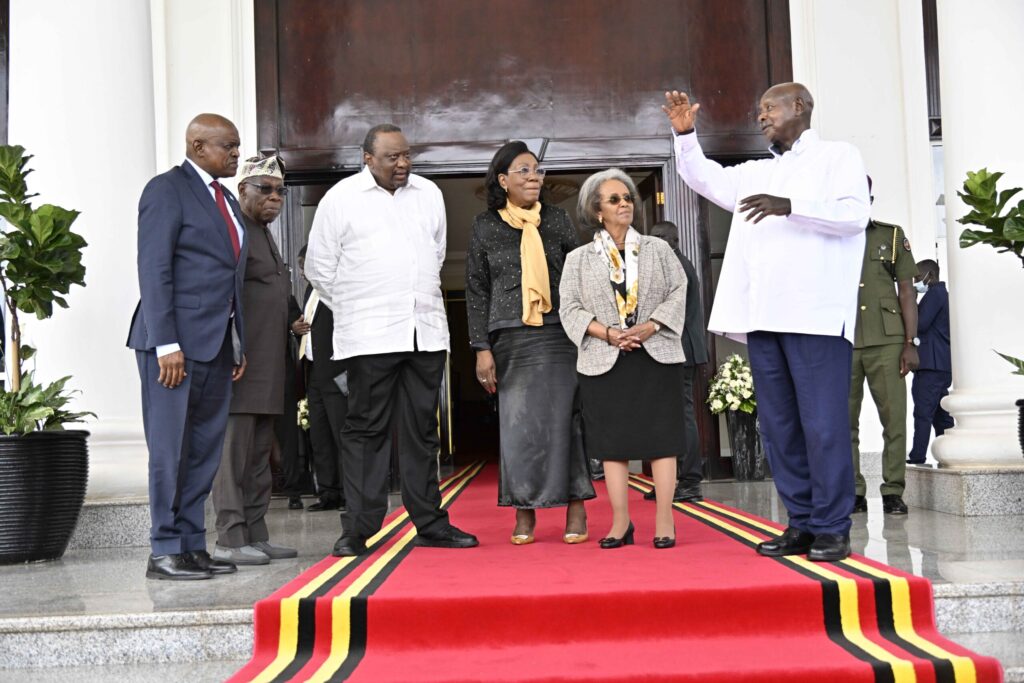
The leaders met at State House, Entebbe
By our reporter
President Yoweri Kaguta Museveni received members of the AU–EAC–SADC panel of facilitators for the Democratic Republic of Congo peace process at State House, Entebbe, as regional leaders intensified efforts to advance dialogue and stability in Eastern DRC.
The engagement that happened yesterday (Feb.3) formed part of ongoing regional consultations aimed at addressing the prolonged conflict and its impact on the Great Lakes region. The facilitators are in Uganda on a working visit focused on strengthening coordination and sustaining momentum toward peace.
The delegation was led by H.E. Faure Essozimna Gnassingbé, President of the Republic of Togo, and comprises former African heads of state appointed to guide and support regional peace initiatives. Members of the panel include H.E. Olusegun Obasanjo, former President of Nigeria; H.E. Uhuru Kenyatta, former President of Kenya; H.E. Sahle-Work Zewde, former President of Ethiopia; H.E. Dr. Mokgweetsi Eric Keabetswe Masisi, former President of Botswana; and H.E. Catherine Samba-Panza, former President of the Central African Republic.
...
The leaders met at State House, Entebbe
By our reporter
President Yoweri Kaguta Museveni received members of the AU–EAC–SADC panel of facilitators for the Democratic Republic of Congo peace process at State House, Entebbe, as regional leaders intensified efforts to advance dialogue and stability in Eastern DRC.
The engagement that happened yesterday (Feb.3) formed part of ongoing regional consultations aimed at addressing the prolonged conflict and its impact on the Great Lakes region. The facilitators are in Uganda on a working visit focused on strengthening coordination and sustaining momentum toward peace.
The delegation was led by H.E. Faure Essozimna Gnassingbé, President of the Republic of Togo, and comprises former African heads of state appointed to guide and support regional peace initiatives. Members of the panel include H.E. Olusegun Obasanjo, former President of Nigeria; H.E. Uhuru Kenyatta, former President of Kenya; H.E. Sahle-Work Zewde, former President of Ethiopia; H.E. Dr. Mokgweetsi Eric Keabetswe Masisi, former President of Botswana; and H.E. Catherine Samba-Panza, former President of the Central African Republic.
Addressing the meeting, President Museveni said, “that the DRC conflict is well known within the region and stressed that it should not be allowed to drag on, given its deep humanitarian consequences and long history. He pointed out that Uganda alone hosts more than 500,000 Congolese refugees, forming a significant share of nearly two million refugees currently in the country.”
He explained that many of the displaced people originate from neighbouring states and share close ethnic and cultural links with communities in western and south-western Uganda, making the crisis a familiar and personal issue for the country.
Museveni said: “The slow pace toward a lasting settlement was disappointing, especially considering that the core grievances behind the conflict are well understood.”
Reflecting on the past, President Museveni recalled earlier debates about Congo’s future, including periods when the country’s territorial integrity was questioned. He observed that such discussions have faded and that the current challenge centres on unresolved grievances, which, in his view, can be tackled through sustained dialogue grounded in realities on the ground.
The President welcomed the visiting leaders and thanked President Gnassingbé and his colleagues for their commitment to an issue that continues to affect the wider region, expressing appreciation for their engagement and collaboration.
President Gnassingbé, in turn, thanked President Museveni for hosting the delegation and praised Uganda’s consistent role in promoting regional peace and stability. He acknowledged President Museveni’s long experience in mediation and said the panel values his insights as it works through the complexities of the DRC situation.
Former Nigerian President Olusegun Obasanjo emphasized that achieving durable peace in Eastern DRC requires approaches anchored in African realities. He cautioned against relying solely on solutions driven from outside the continent, noting that while international support can be useful, it cannot substitute for locally grounded responses.
He underscored that the crisis extends beyond the M23 issue and involves multiple unresolved grievances. According to him, the facilitators have deliberately taken responsibility to pursue African-led solutions while remaining open to supportive engagement from partners such as the United States, Qatar, France, and others, provided their role complements, rather than dominates, the process.
H.E. Obasanjo also expressed gratitude to President Museveni for meeting the delegation on short notice and highlighted the importance of correctly identifying the root causes of the conflict. He said the challenge lies in how diversity within the DRC has been managed, as well as in the country’s relations with its neighbours, stressing that accurate diagnosis is essential to finding effective remedies.
He welcomed the African Union’s leadership in the peace process, including the establishment of a joint headquarters in Addis Ababa, and reiterated the need for Africa to take ownership of its peace and security agenda.
The high-level meeting was attended by several Ugandan officials, including ministers, Uganda’s Ambassador and Permanent Representative to the United Nations, Adonia Ayebare, and former Prime Minister Amama Mbabazi.