By Our Reporter
The Uganda Civil Aviation Authority (UCAA), in partnership with the Directorate of Citizenship and Immigration Control (DCIC), has conducted a sensitization training aimed at strengthening the evaluation and inspection of travel documents to curb fraud and abuse within Uganda’s aviation sector.
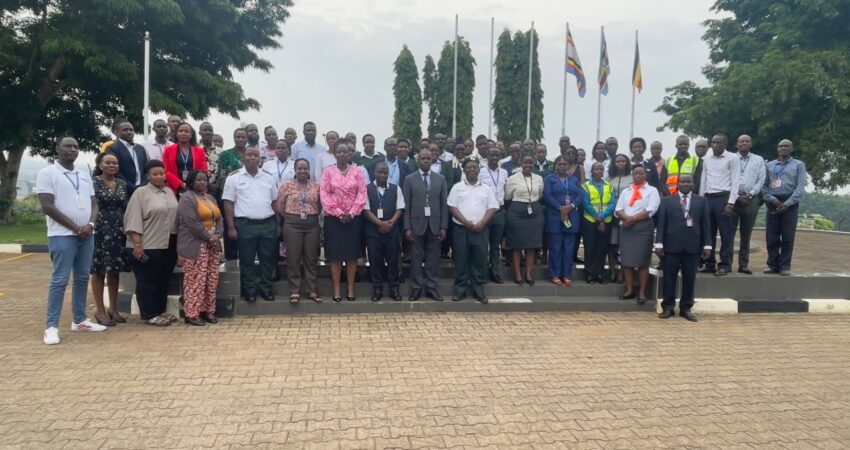
The training, held on Feb.26, at the UCAA Head Office, brought together airline operators, ground handlers, security agencies, and UCAA staff. The session focused on enhancing participants’ capacity to detect forged or fraudulently altered travel documents and to improve coordination among key stakeholders in the air transport chain.
Delivering remarks on behalf of the Director of Safety, Security and Economic Regulation, Mr. Christopher Kasozi, UCAA’s Manager for Economic Regulation, said the training was conducted in line with Standard 3.33 of Annex 9 – Facilitation to the International Civil Aviation Organization Chicago Convention, to which Uganda is a signatory. He noted that compliance with international standards remains central to safeguarding the integrity of Uganda’s aviation system.
...
By Our Reporter
The Uganda Civil Aviation Authority (UCAA), in partnership with the Directorate of Citizenship and Immigration Control (DCIC), has conducted a sensitization training aimed at strengthening the evaluation and inspection of travel documents to curb fraud and abuse within Uganda’s aviation sector.
The training, held on Feb.26, at the UCAA Head Office, brought together airline operators, ground handlers, security agencies, and UCAA staff. The session focused on enhancing participants’ capacity to detect forged or fraudulently altered travel documents and to improve coordination among key stakeholders in the air transport chain.
Delivering remarks on behalf of the Director of Safety, Security and Economic Regulation, Mr. Christopher Kasozi, UCAA’s Manager for Economic Regulation, said the training was conducted in line with Standard 3.33 of Annex 9 – Facilitation to the International Civil Aviation Organization Chicago Convention, to which Uganda is a signatory. He noted that compliance with international standards remains central to safeguarding the integrity of Uganda’s aviation system.
Kasozi explained that following the domestication of Annex 9 under the National Air Transport Facilitation Programme, DCIC is mandated to support aircraft operators in assessing the validity of passports and other travel documents presented by passengers. This role, he said, is critical in deterring document fraud and preventing abuse of immigration and aviation systems.
He further highlighted that the subject falls under the International Civil Aviation Organization’s Universal Security Audit Programme – Continuous Monitoring Approach (USAP-CMA), specifically within the auditable components of Annex 9 on Facilitation. During the 2024 audit, Uganda was assessed under Protocol Question 9.040 and was found compliant, reflecting the country’s adherence to global aviation security and facilitation standards.
The training was officially opened by Mr. Macellino Bwesigye, Assistant Commissioner for Border and Foreign Nationals Management at DCIC. He commended UCAA and DCIC for organizing what he described as a timely and important engagement. Bwesigye underscored the need to build awareness of fraud risks specific to airline operations, equip frontline personnel with practical tools for detecting and preventing document fraud, and strengthen collaboration among aviation and border management stakeholders.
He emphasized the importance of fostering a proactive culture in managing fraud risks, noting that early identification of red flags and suspicious activity is essential in protecting national security and maintaining the credibility of Uganda’s air transport system. He also called for continued sharing of best practices in prevention and response.
The session attracted more than 60 participants and featured detailed discussions on identifying security features in the Ugandan passport, understanding security elements embedded in various travel documents, and applying broader passenger profiling and fraud detection techniques. Organizers said the engagement marked another step in reinforcing inter-agency cooperation and safeguarding the integrity of Uganda’s aviation and border control systems.